Pixels & tags, placed once
Meta Pixel, Google tags, and GA4 events fired through one GTM container, not scattered across the page by three different freelancers.
Flat-fee websites for law firms, built for the way clients find lawyers now: fast, credible, and readable by the AI engines your next client is already asking. No retainer required, no proprietary platform, no multi-year contract.
The legal web market runs on lock-in. Ask any lawyer who has tried to switch vendors: the exit is where the fine print bites. Three patterns show up over and over.
The big legal website platforms build on a CMS only they run. Cancel, and the design, the content, sometimes even the domain stay behind. Lawyers have paid five figures just to buy their own websites back.
Legal marketing agencies fold the website into a monthly retainer, often thousands to tens of thousands a month on one-to-three-year contracts, with billing that blurs ad spend into agency fees. The site is the hook that keeps the retainer alive.
Several website vendors also run the lawyer directories that dominate search results and AI citations. Their directory outranks the site they sold you, so you end up competing with your own vendor for your own name.
How we're different
We build the site once, for one flat fee quoted before work begins, on an open stack any developer can maintain. At handoff you hold the keys: code, content, domain, analytics. Stay on month-to-month support if you want us around. Leave whenever, and everything comes with you. We don't run a directory, so we're never competing with you for your own name.
Hiring a lawyer is a high-stakes, high-skepticism decision. Every part of the build exists to make your firm easy to find, easy to verify, and easy to trust.
A dedicated page for every practice area and the questions clients ask before hiring, structured the way search and AI engines evaluate legal expertise. Not a one-page brochure with anchor links.
Bio pages are consistently among the most-visited pages on a firm’s site. We build them as credibility assets: bar admissions, results, publications, and Person markup tying each attorney to the firm.
LegalService markup for the firm, Person markup for the attorneys, FAQ markup on the questions clients actually ask: the structured data that lets engines resolve your firm as an entity worth citing.
Server-rendered HTML, answer-shaped content, llms.txt, and crawler rules that welcome the AI engines your clients are asking. The same playbook behind the 10x AI-agent traffic in our case study below.
Attorney advertising is regulated and the rules vary by state. We place the disclaimers your bar expects where they are conspicuous, not buried in fine print, and structure testimonials and results pages so your firm can sign off with confidence.
The code, the content, the domain, the analytics. No proprietary CMS, no buyback negotiation, no hostage situation. Any developer can pick it up after us.
Engagement
One flat fee for the build, quoted before work begins. Optional month-to-month support after launch, no minimum term. Start with a discovery call: we'll audit your current site and contract, scope the work, and tell you honestly if it's a fit before you commit to anything.
In Clio's latest Legal Trends Report, 14% of consumers said they had already used generative AI for a legal question and another 43% said they would. Nearly a quarter of legal searches now trigger an AI-generated answer. The firms those engines recommend are the ones they can read, parse, and verify.
What we won't promise
That ChatGPT names your firm tomorrow. Those engines are a black box, and anyone guaranteeing placement is selling snake oil. What we promise is that nothing on your site will be the reason it doesn't.
Every word ships as real server-rendered HTML. The crawlers behind ChatGPT, Perplexity, and Google’s AI answers read the whole page, not an empty JavaScript shell.
Practice pages that answer pre-hire questions directly, under clear headings, so an engine can lift a paragraph and cite your firm without garbling what you do.
Consistent name and address, LegalService and Person markup, reviews, and clean directory listings, so engines connect your site, your attorneys, and your reputation into one entity they can recommend.
AI engines weigh trust signals the way a skeptical client does: bar admissions, case results, awards, real attorney profiles with real credentials. We surface the credibility your firm already has.
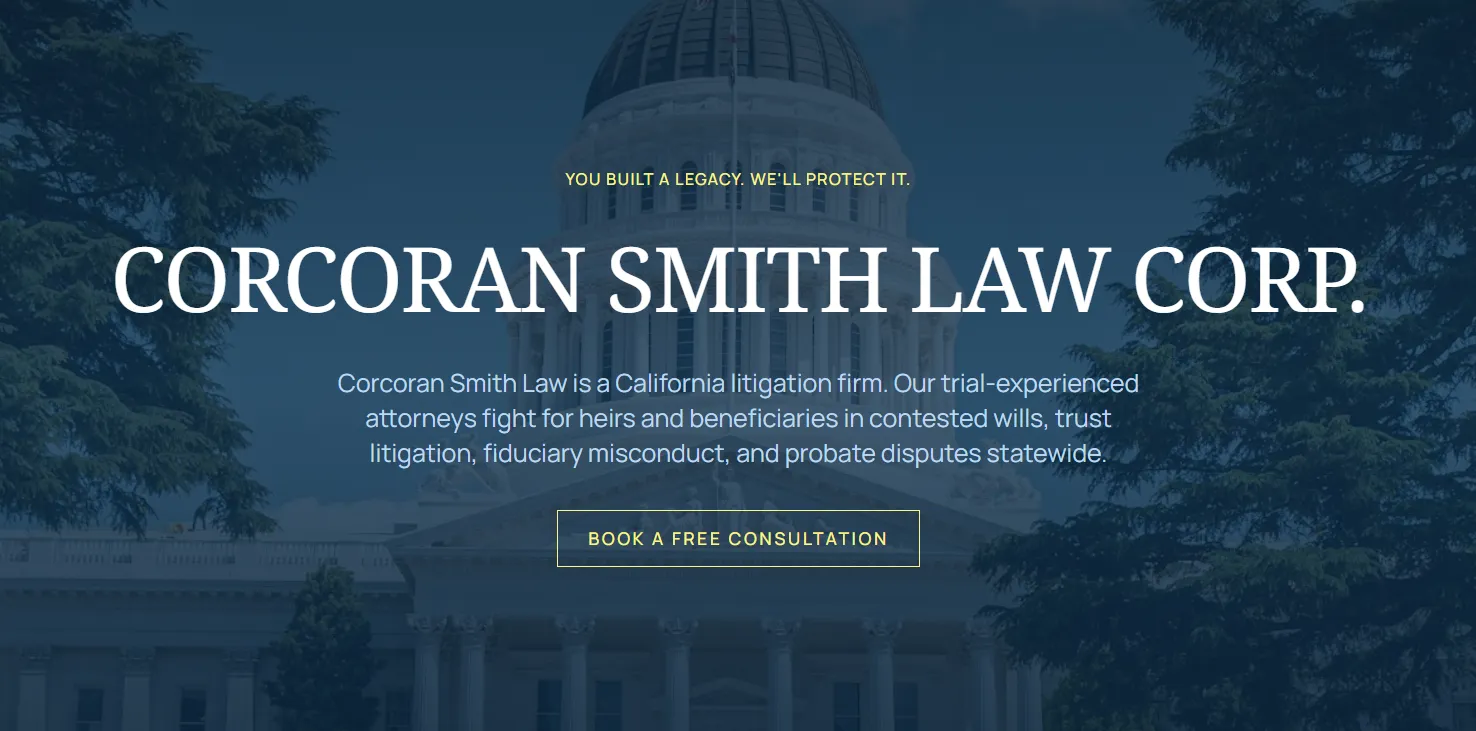
A California estate-litigation firm came to us with a broken, fragmented site on a rented platform. We rebuilt it end to end on Astro: 301 map, schema, llms.txt, analytics repaired, and an authority-first content strategy built on the credibility the firm already had.
We make sure your site sends quality conversion data back to Google and Meta, through pixels, the Conversions API, or offline conversion imports, whichever your accounts actually use. Better signal in, better optimization out.
Meta Pixel, Google tags, and GA4 events fired through one GTM container, not scattered across the page by three different freelancers.
Meta's Conversions API and Google's offline and enhanced conversions, so the data still lands when ad blockers and browser limits kill the pixel.
Deduplicated events, mapped to the conversions that actually matter, and consent-aware so the platforms optimize on data that's real.
What we won't promise
That we'll run your campaigns. We build and verify the pipeline so clean data reaches the ad platforms. What you bid on after that is your call, or your media buyer's.
Straight answers to what law firms ask us.
Yes, all of it. The code, the content, the design, the domain, and the analytics accounts are yours at handoff. There is no proprietary CMS and no dependency on us to keep the site live. If you ever leave, everything comes with you, which is not how most legal website vendors work.
One flat fee, quoted before work begins, based on scope. Legal marketing agencies typically bundle a website into a monthly retainer running from a few thousand to tens of thousands of dollars on a one-to-three-year contract, and website platforms rent you a site by the month forever. Our number is a project price: when the build is done, the site is yours. Support after launch is optional and month-to-month.
Yes. First, read your contract: notice windows, auto-renewal dates, and who registered your domain all matter. We audit what is portable (domain, content, rankings), build the new site in parallel, map every existing URL with a 301 redirect, and time the cutover to your exit date. If your vendor controls your domain, recovering it is the first order of business.
Nobody honest can promise that: those engines are a black box, and anyone guaranteeing placement is selling the old snake oil with a new label. What we can do is remove every reason they would skip you: server-rendered pages they can read, answer-shaped content they can cite, schema and reviews that make your firm a resolvable entity. Our first law firm client saw a 10x increase in AI-agent traffic in the first 45 days after launch.
Yes. Before launch we crawl the old site and build a 301 redirect map so every existing URL points to its new home. Rankings, backlinks, and bookmarks carry over. In our Corcoran Smith Law rebuild, Google impressions and clicks doubled in the first 45 days after the migration.
We produce the structure and the copy with your attorneys, in the firm’s voice, and nothing publishes without your review. Practice-area pages, attorney bios, and FAQ content are drafted from what your firm already knows and has already won; our job is making that expertise legible to clients and to the engines they ask.
We build to them: required disclaimers placed conspicuously, testimonial and past-results pages structured to your state bar’s requirements, and a named responsible attorney where your jurisdiction expects one. We are engineers, not lawyers, so final compliance sign-off sits with your firm, but you will not be retrofitting disclaimers onto a site that ignored the rules.
Tell us what you're building, rescuing, or modernizing. We'll get back with our honest read: what we'd do, whether it's a fit, and what working together looks like.